Your Instructor in Peoria, AZ
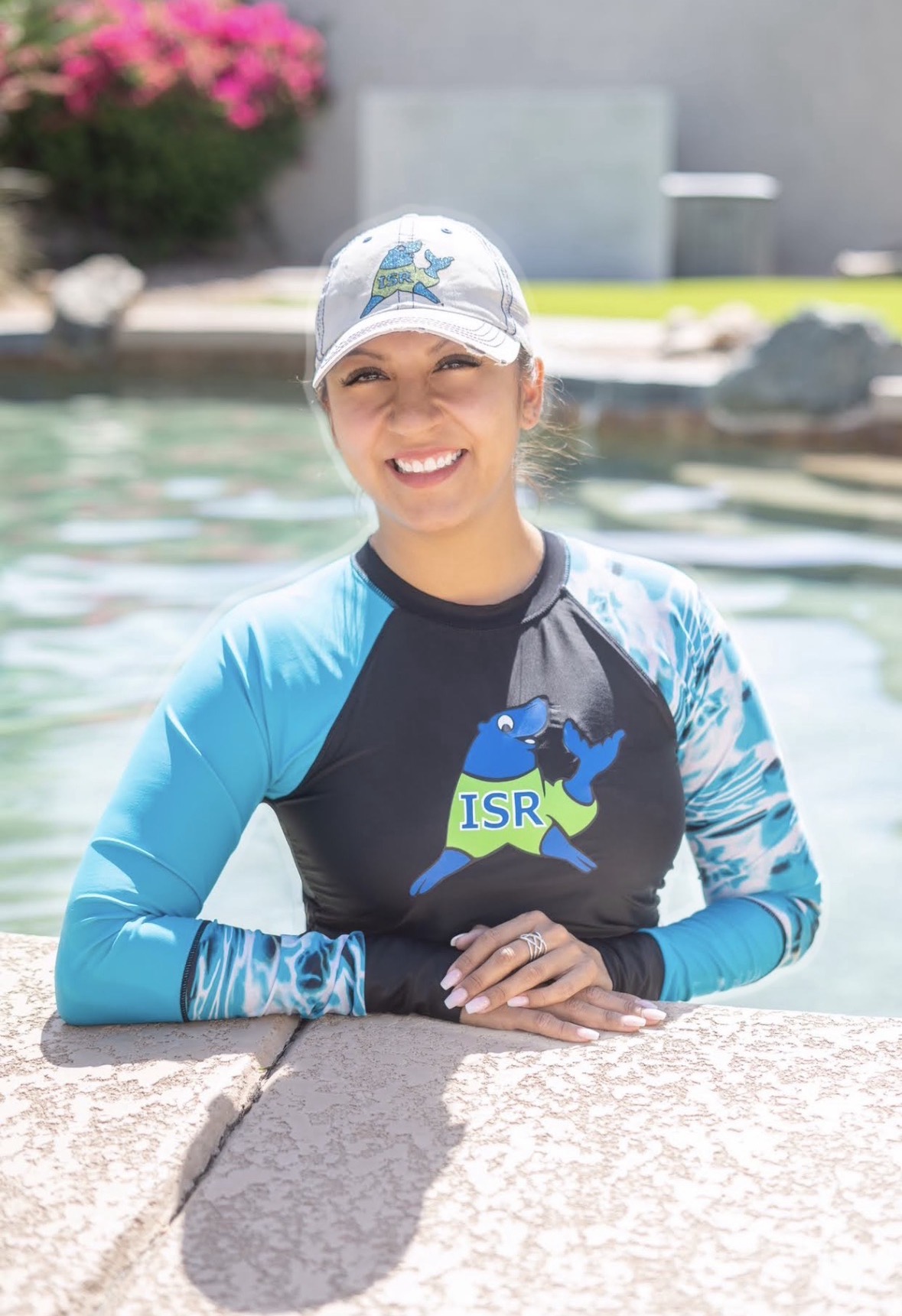
Hi! Silvia here! I've been teaching ISR for 9 years and absolutely love it! I love my students and their families; it is my highlight of the summer to watch my students grow and learn confidence in the water as well as respecting the water. I've spent years working with kids in a preschool as well as before school and after school programs.
I spent 20 plus years in the military and retired in 2021. Even though the military was one of the highest accomplishments in my life, teach kids to survive in the water is an even bigger accomplishment. It has turned into a passion, not just a job.
FAQs
What is the American Academy of Pediatrics position on swimming lessons for young children?
The AAP encourages parents to consider that starting water-survival skills training at an early age must
be individualized, based on the child's frequency of exposure to water, emotional maturity, physical
limitations and health concerns related to swimming pools. You can view their policies and suggestions
through the AAP website here: https://www.healthychildren.org/English/safety-prevention/at-
play/Pages/Swim-Lessons.aspx
I hear you say your priority is survival skills. Will my child learn to actually swim?
Yes. At ISR, we believe that part of survival for a child who can walk is swimming. Children learn the
swim-float-swim sequence so that they could get themselves to safety. The difference in our program is
that they will learn swimming AND survival skills and how to be an aquatic problem solver.
If more frequent but shorter lessons are better, then why don’t you teach 7 days/week?
Everyone needs a little break from learning to process the information and in this case to give muscles a
chance to recover. In addition, you need to be able to spend time with your family, as does your
instructor. Weekends are family time. Periodically, if weather or other issues have cause lessons to be
canceled for numerous days, your instructor may choose to offer make-up lessons on a weekend. This is
strictly up to the instructor and based on the availability of parents.
Is it the baby fat that makes them float?
Actually, the primary factor in a baby’s ability to float is the ability to take air into the lungs. To maintain
this access to air, the child must adjust his/her posture. The difference in positioning for an adult can be
inches. For a baby, this adjustment is reduced to centimeters. If a child’s body posture is just a few
centimeters off, it can make the difference between the face being submerged or the child having access
to air.
Get in Touch
We would love to hear from you.